Marvin's Note: I met Aaron at Edinboro University, where we were both journalism students. One of the things that struck me about Aaron was his intense love for hip-hop music. I mean, Aaron's the type of guy who could sit and discuss every track of every album of Biggie and 2Pac's career with you for hours. Yet, Aaron's interest in cultures which many people believe to be foreign to him has had its pros and cons throughout the years, here's his story...By: Aaron McKrellI consider myself a pretty cultured person, especially for a white kid who grew up in an affluent suburb of Erie, Pa. Particularly, I am familiar with black culture. Growing up, my father took my brother and I with him to high school football games which he would cover as a sports medicine physician.It was during these cold Friday nights that I became acclimated with black culture, from the dress to the style to the poor living conditions of many residents of Erie's East side.Those experiences, as well as the fact that I have several adopted black cousins, many black friends, and an obsession with hip hop music and culture, have made me very familiar with black culture. In truth, I feel just as comfortable around my black friends as I do lounging in my house in the suburbs, if not more. However, when I stepped into a gym at a local YMCA last week, I felt strangely uncomfortable.Walking into the gym, I quickly noticed I was the only white guy in the place. That wasn't an issue; when I'm with my friends I am often the only white guy in the room. Besides, I believe that people are people, so I thought nothing of it and started shooting around. Eventually, I recognized one of the kids shooting on the opposite end of the court as a member of the Strong Vincent basketball team, one that I had interviewed when covering a high school playoff game for the local newspaper. I walked toward him and asked if he remembered me."I think I would remember a 6'2, 200-something white dude," he said. I reminded him who I was and he greeted me enthusiastically, bouncing over to me and dapping me up. I caught up with him for a moment and then went back to shooting.After warming up for a bit, I asked the guys if they wanted to get a game going. Unfortunately, other than the kid I had interviewed, no one seemed interested in talking to me and I was met with a few shrugs of indifference.I shot around a little longer and then asked again. I was met with pretty much the same response. The guys had apparently been at the gym all day and were resting against the wall, chatting about school and basketball. I tried to join in, purely out of interest in the hoops they were talking.My interest was met with more indifference.I tried to carry the conversation, but the warmest response I got was a half-smile. Soon after, when I realized there was going to be no pickup game, I went downstairs to use the elliptical.I knew what had happened. The guys thought I was some white dude trying to impress them by talking hoops. I've seen it before. As a matter of fact, it's something some of my black friends laugh about; white people trying to impress them in an awkward manner. Here's the problem: I wasn't trying to impress anybody. In reality, all I wanted to do was chat about hoops and play a few pickup games. But the guyssaw me as an outsider.This has happened to me before; a few months back I was filling up my tank at a gas station and heard the beat to Kendrick Lamar's "Bitch, Don't Kill My Vibe" coming from a neighboring car, except it wasn't Kendrick rapping, it was some pop singer crooning.I asked the lady in the car who it was on the song, and she just responded by simply saying "okay", which basically meant "whatever", as she most likely assumed i was trying to impress her or force aconnection.I can't be mad at that lady, or the guys in the gym. White people trying to impress black people is something that I've seen happen many times, and I'm sure that would make anyone jaded. For me though, I felt a little hurt, because my interest was genuine and I was viewed as just another white dude trying to impress the black guys.The old saying goes, don't complain unless you can offer a solution, so here it is: keep an open mind and be yourself.As difficult as it is for people to fight their preconceived notions of other cultures, it can be done. If you're the only white guy in a room full of black guys, don't try to impress them based on a movie you saw or song you heard.Likewise, If you see a guy walking into the gym, don't assume he acts a certain way because of the color of his skin. And it's not just a white-black thing; it applies to all ethnicities and cultures.Be yourself, and give people a chance to be who they are. If that happens, maybe I'll be able to walk into the gym and talk with some kids from Strong Vincent without any preconceived notions tensing the air.
And in turn, if that conversation can happen, we can open up the floor to a whole lot more.
Showing posts with label Society. Show all posts
Showing posts with label Society. Show all posts
Tuesday, June 4, 2013
0 White Kid, Black Culture


Sunday, June 2, 2013
2 Why they Sag
By: Marvin DeBose

"I just don't understand why they wear their pants like that."
Well, that's the point.
Many people don't understand it, they complain about it, they don't like the way it looks, and that's a big part of the reason why many young people are going to keep wearing their pants like that.
It seems as if these days, sagging pants has become one of the most controversial issues in America. There has been discussion about the issue of people sagging their pants and there has even been laws enacted in some cities against the common practice.
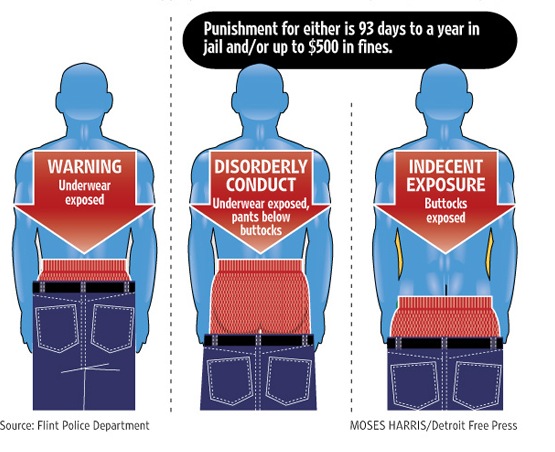
Many people talk about the origins of sagging.
"It started in the prisons, people sagged their pants to show that they were 'available'" , they'll say.
Others say,"The rappers made it popular."
But those theories don't touch on the 'why' of pants sagging.
The reason why many young people sag their pants goes much further than a fad. It is rooted in cultural rebellion and protest.
Similar to the way in which many people wore their hair long in the late 1960s-early 1970s as a form of cultural rebelliousness, popularized in the anti-war/counter-culture movement.
 |
| "Get a job, you long-haired hippy freaks!" They both did get jobs, I hear they went into politics... |
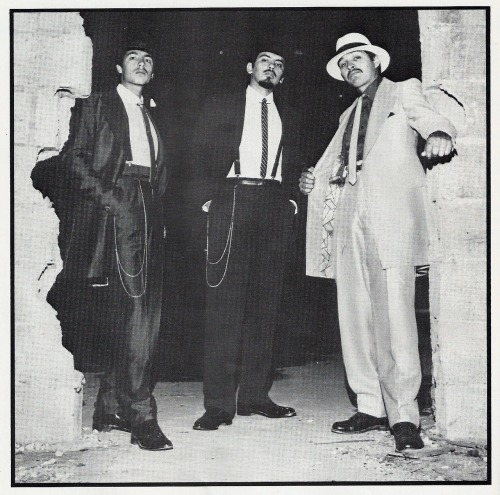
It's similar to the "zoot suit" controversy of the 1940s in which oversized, flamboyant suits were popularized in the African-American, Latino and Italian communities as a form of rebelliousness. They were even by some to be deemed to be unpatriotic because their suits "wasted materials that should be put toward the war effort".
Sagging pants is just another middle finger to society and to what is deemed as being "acceptable". It's a subtle, unspoken form of rebellion from a largely misunderstood, miseducated, unheard generation basically saying, "So what if who I am and the way I wear my pants makes you uncomfortable, the conditions of society makes me uncomfortable."
That's the root of it all, and I don't think necessarily everyone who sags their pants thinks this, but this is what it is rooted in.
It's a gesture popularized by (but not restricted to) youth of the inner city, a place which rapper Tupac Shakur once referred to as the "outer city" because he felt that the people who lived there were largely left out many of the things which society has to offer.
Now I know some people may think, "Yeah, but the sagging pants just looks stupid,"
But what we also have to understand is that this also reflects a lack of community leadership because cultural rebellious energy, which is a big part of pants sagging, is usually channeled and molded into more productive, organized use by leaders and social movements.
However, when leaders don't exist and social movements don't channel this rebellious energy, as well as to make productive use of it, that's where we get forms of rebellion like pants sagging.
"Yeah well, I still think its stupid.", some might say.
Yeah well, maybe it's stupid to that people but so much energy into criticizing everything that the youth does but do hardly anything to try to understand them, mentor them and help them grow.
Or maybe it's stupid that out of all of the things going on with America's inner city youth, including the closing of public schools, lack of jobs, crime, incarceration and police brutality, the main thing which outrages people and forces them into action is the way that they wear their pants.
So who really looks stupid?
I'm not saying that young people should sag their pants, but I understand why they do it.
Saturday, May 25, 2013
0 The Case of the "Crazy" Celebrity
.jpg)
It's a scenario we've become all too familiar with. A celebrity has their stint in the limelight, and before we know it they become the center of attention, not for their talent, but for their misfortune.
This misfortune can be trouble with the law, erratic behavior, controversial comments/actions, drug problems, sometimes it can all of them combined.
After a while, the general consensus becomes: "Well, I guess (insert celebrity's name here) has gone crazy."
Yet, for many people, that's when the real show begins.
We laugh at them, comedians make jokes about them, tabloids exaggerate stories about them and TMZ has a field day with them. But no one stops and thinks, "What if that was me?"
What if it were you that the media was talking about 24/7? What if you were constantly being publicly criticized for nearly everything you did?
What if you had your privacy invaded and had people asking you questions about your personal life every time you went out in public?
Don't get me wrong, this isn't meant to be me speaking on pedestal or to say that some celebrities aren't directly responsible for the controversies they face.
What I'm saying is that celebrities are people too. They make mistakes, they go through things emotionally and psychologically. But the difference between us and them is that they have money and millions of people watching them.
A prime example of this can be seen in the recent controversy surrounding actress Amanda Bynes. Bynes was once a promising young actress and in her younger years, she was a stand-out talent on Nickeloden.
But in the past year, she's fallen on some hard times, she's been in the news for alleged drug issues and other legal issues, as well as various episodes of erratic behavior.

Now it's quite obvious that Amanda Bynes is someone who is going through a lot mentally, yet the world simply sits back and enjoys the show.
Her story isn't that different from that of Kat Williams, Charlie Sheen, Lindsay Lohan, and many others.
Yet, whats really wrong with this is that some of the same people who laugh and make a spectacle out of celebrities' misfortune are the same ones who idolize them when they die as a result of their stress.
Need an example?
Look no further than the "King of Pop" himself, Michael Jackson.

He was another person who was demonized, and portrayed as "crazy" in the media, and even accused of false crimes, and what did many of us do? We fed into it.
We couldn't understand why he seemed so different from us. We didn't know why he chose to dress, talk and act the way he did, we just let the media write him off as being "crazy", as being a "rapist" and a child molester. Those controversies are believed to have intensified many of Jackson's drug problems, which is directly related to his untimely death.
Yet, after he died, everyone became Michael Jackson fans again. After we recognized how talented he really was since he was no longer with us, many of us started to say, "Hey, maybe Michael wasn't as bad as they made him out to be."

Does anyone see a big problem with this?
Why does it take for a person to die for us to have some type of empathy for them?
Why don't we question the reasons behind people's controversy while they are alive?
Why do we let the media control our opinion of public figures and why is the media so quick to tear these people down?
Lauryn Hill, another troubled star whom many people have deemed "crazy", said it best in her song Superstar:

"Just as Christ was a superstar... They'll hail you, then they'll nail you, no matter who you are."
Maybe these celebrities that the media are always talking about aren't the main ones who are "crazy", maybe something else is "crazy", like society.
Maybe the entertainment industry itself is a bit twisted and maybe America's obsession with the personal lives of celebrities is strange.
How about we try to focus on handling our own personal issues?
Or what if we stop paying so much attention to celebrities and start paying more attention to the people in our lives that matter, like our families?
Or maybe I'm just talking crazy.
Saturday, May 4, 2013
0 The Injustice of Indifference
Recently, I was on Facebook, when I came across something that disgusted me...Well actually, that happens pretty often, but I digress.
I saw a status written by a young women who apparently discussing her previous night out, she said:
"Ugh I'm definitely going to be banned from all Philly cabs or be the target of a terrorist attack at some point. I totally told this dbag cab driver to go back to his own country last night lol"
But I wasn't so much surprised that she would post something like that, after all, America hasn't come that far in terms of cultural sensitivity and acceptance.
What shocked me even more were the reactions to what she said, one of her friends commented, "USA USA USA", while another responded, "Haha, this just made my day."
I sat and thought to myself, "How should I respond to something like this?"
Then, I began to think of how many times I've been in arguments with people via Facebook for similar things and at the end of the day, it just seemed to be a waste of time.
That made me ask myself, "Should I respond to this?"
So, I did what most people of my generation does when they face a dilemma...

I made a Facebook post about it.
I informed my friends of these comments and asked for their advice on what I should do. One said, "I think you need to say something... A lot of people who say stuff like that think they're in the majority... They think it's the status quo."
I responded, "Yeah, but I just hate arguing with people who don't even know why their wrong."
What he said next had a profound effect on me, here's what he told me:
"Don't say something because it's fun [or convenient], say something because its important."
At that moment, I realized that I almost fell into the trap of apathy and indifference which many Americans fall into when it comes to issues of discrimination.
Far too often we only speak up against wrongs which only affect us or those close to us, but won't speak out for the people who don't belong to the groups to which we belong. Thinking about this, I figured I had to say something, I said:
"I know that I don't usually comment on your stuff but this is offensive. If he was a jerk, call him a jerk. But the 'terrorist' and the 'go back to your country" stuff was uncalled for."
Minutes later she responded:
"That's the whole point, I was a little tipsy, I'd never say anything like this sober. That's the joke, dude."
Yet, this dude (me) didn't see the joke. So, I then responded with the following:
"Being tipsy isn't a free pass to be offensive (or to make light of it the next day). If anything this is something you DON'T want to share because judging from some of the responses on this post, some people think this kind of stuff is ok ... If someone told me, 'Go back to Africa' (which is a lovely place, by the way lol) I'd be offended, whether that person was sober or not... I'm not judging/criticizing you personally, I'm just against what you said."
Mysteriously, as I posted that comment, her page disappeared and I saw this:
 Most likely, this meant I'd been deleted, blocked, or both. But either way I was happy that I stood up for a just cause.
Most people believe in ignoring things like that, or just writing people off as being ignorant. Yet, how does that help to stop the behavior in question?
Some people might say, well "They're not talking about me." But when I hear that I often think of some wise words that one of my mentors, a sociologist by the name of Dr. Werner Lange once taught me. They were the words of a German minister named Martin Niemoller, who commented on the indifference of German intellectuals during the rise of the Nazis, he said:

I saw a status written by a young women who apparently discussing her previous night out, she said:
"Ugh I'm definitely going to be banned from all Philly cabs or be the target of a terrorist attack at some point. I totally told this dbag cab driver to go back to his own country last night lol"
But I wasn't so much surprised that she would post something like that, after all, America hasn't come that far in terms of cultural sensitivity and acceptance.
 |
| And just because this guy is in office doesn't mean that everything's cool either. |
What shocked me even more were the reactions to what she said, one of her friends commented, "USA USA USA", while another responded, "Haha, this just made my day."
I sat and thought to myself, "How should I respond to something like this?"
Then, I began to think of how many times I've been in arguments with people via Facebook for similar things and at the end of the day, it just seemed to be a waste of time.
That made me ask myself, "Should I respond to this?"
So, I did what most people of my generation does when they face a dilemma...

I made a Facebook post about it.
I informed my friends of these comments and asked for their advice on what I should do. One said, "I think you need to say something... A lot of people who say stuff like that think they're in the majority... They think it's the status quo."
I responded, "Yeah, but I just hate arguing with people who don't even know why their wrong."
What he said next had a profound effect on me, here's what he told me:
"Don't say something because it's fun [or convenient], say something because its important."
At that moment, I realized that I almost fell into the trap of apathy and indifference which many Americans fall into when it comes to issues of discrimination.
Far too often we only speak up against wrongs which only affect us or those close to us, but won't speak out for the people who don't belong to the groups to which we belong. Thinking about this, I figured I had to say something, I said:
"I know that I don't usually comment on your stuff but this is offensive. If he was a jerk, call him a jerk. But the 'terrorist' and the 'go back to your country" stuff was uncalled for."
Minutes later she responded:
"That's the whole point, I was a little tipsy, I'd never say anything like this sober. That's the joke, dude."
Yet, this dude (me) didn't see the joke. So, I then responded with the following:
"Being tipsy isn't a free pass to be offensive (or to make light of it the next day). If anything this is something you DON'T want to share because judging from some of the responses on this post, some people think this kind of stuff is ok ... If someone told me, 'Go back to Africa' (which is a lovely place, by the way lol) I'd be offended, whether that person was sober or not... I'm not judging/criticizing you personally, I'm just against what you said."
Mysteriously, as I posted that comment, her page disappeared and I saw this:

Most people believe in ignoring things like that, or just writing people off as being ignorant. Yet, how does that help to stop the behavior in question?
Some people might say, well "They're not talking about me." But when I hear that I often think of some wise words that one of my mentors, a sociologist by the name of Dr. Werner Lange once taught me. They were the words of a German minister named Martin Niemoller, who commented on the indifference of German intellectuals during the rise of the Nazis, he said:
"First they came for the communists,and I didn't speak out because I wasn't a communist.
Then they came for the socialists, and I didn't speak out because I wasn't a socialist.
Then they came for the trade unionists, and I didn't speak out because I wasn't a trade unionist.
Then they came for the Jews, and I didn't speak out because I wasn't a Jew.
Then they came for me, and there was no one left to speak for me."
We all have a human responsibility to speak out against injustice and unfair treatment of other people, whether its on the basis of race, ethnicity, religion, class, sexual orientation, political beliefs, etc.

Writer, and Holocaust survivor Elie Weisel once said, "The opposite of love is not hate, it is indifference." When we turn a blind eye to injustice and become indifferent and apathetic to the struggles of those who are culturally different from us, we indirectly contribute to injustice.
It is OUR job be to agents for love and truth to truly stand up for the principles of "Liberty and justice for ALL", because authentic liberty and justice cannot exist without genuine love and truth.
Thursday, April 4, 2013
0 Is Journalism Dying?
Published in The Edinboro Spectator: April 4th 2013
The group consists of hundreds of journalism professionals and job seekers looking to connect with people within the field. Me, being a young journalist approaching graduation, joined this group as soon as I read about it.
Seeking advice on breaking into the field of journalism, I asked a question within the group's discussion page.
"I'm a grad student approaching graduation and trying to get my foot in the door as a journalist. Do you have any advice as it pertains to the job search?", I asked.
To my surprise, over 30 people commented with advice and tips for me. Yet, not all of the responses were positive. While I was reading the comments I noticed a few group members had responded in quite a negative tone.
One poster responded, "Yeah, I'd suggest going back to school and getting a law degree."
Another one commented, "Journalism is a dead-end business... students are making a mistake in pursuing what is laughably called a career as a reporter."
Now, I've heard this sentiment many times before.
In fact, as an undergraduate student at Edinboro University, pursuing my degree in print journalism. I even had a guest speaker in one of my reporting classes call journalism "a dying field".
The economy isn't what it used to be, newspapers companies are shutting down, and technology is changing the face of both print and broadcasting journalism as we know them.
Yet, journalism is not dying, it is only evolving.
Yeah, it may be much harder to break into the business these days, but we can't afford to lose hope. A huge problem is that many people already have.
Some are too afraid of change and are so stuck in the way that things USED to be that they cannot adapt to the way that things actually are.
All fields evolve in some way, look at medicine, law, business and entertainment.
What makes people think that journalism is going to be exempt from change?
Maybe we're not living in the same as the era of journalism that our grandparents experienced.

Yet, journalism still matters.
I believe that when a journalist is truly passionate enough about their craft, they don't wait for someone else to validate their skills. They don't wait for some "job" to make them feel like a journalist.
True journalists aren't made by their major or career, they're made by whats in their heart.
True journalists are inquisitive, curious and fearless. Therefore, they FIND and/or CREATE a way to be successful and prosperous at what they do.
So, whether one is a writer for the New York Times, is an anchor on CNN, or simply a blogger, we should take pride in what we do, because our work is monumental.

Journalists are supposed to be society's messengers, the writers of history, the the voices of the voiceless, those who make sense of seemingly senseless times.
They help us to understand this ever-changing world in which we live. They analyze and examine our lives, and as Socrates said, "The unexamined life is not worth living."
People have sacrificed their lives for the sake of journalism
Therefore, to neglect journalism is to neglect a huge part of our lives.
Being a journalist is a heck of a responsibility, yet it is an honor as well. That is something that we all need to remember.
As long as passionate journalists live, journalism will never die.
Thursday, March 28, 2013
0 From Malcolm Little to Lil' Wayne
Note: This editorial was originally sent to the hip-hop website "AllHipHop.com" following the backlash of an editorial by social commentator and author, Dr. Boyce Watkins which was published on their site. In the editorial, Watkins examines the parallels of the lives of a young Malcolm X and Lil' Wayne, from a sociological perspective, discussing how they were both products of a similar social structure (Click here to read Dr. Watkins' editorial)
Yet, Watkins editorial was met with an overwhelmingly negative response from readers who found the thought of even comparing Lil' Wayne's life to Malcolm X's to be an insult.
Me, feeling as if most readers completely missed Watkins point, decided to write a response editorial to AllHipHop.com.
Yet, the editors of AllHipHop.com never published the editorial nor did they respond to my email.
Here's what I had to say:
Apparently a lot of AllHipHop.com readers were up in arms after reading Dr. Boyce Watkins’ editorial “What Lil Wayne has in common with Malcolm X”. Many people responded with a sentiment of outrage, saying things like, “How dare he compare Lil Wayne to Malcolm X!” or “This article is a disgrace!”
Some even went as far as to diss Dr. Watkins personally, one reader called him “a f*cking idiot”.
These comments revealed to me a big problem of today which is the fact that in the era of internet journalism, many people don’t a) actually READ ARTICLES FULLY, nor do they b) think critically and analyze what they read.
Of course Lil' Wayne is no Malcolm X, that’s obvious. Malcolm X was one of the biggest champions for African American people as well as one of the greatest minds of the 20th century, hands down. But that wasn’t the point that Dr. Watkins was trying to make.

Dr. Watkins wasn’t saying that we should look up to Lil' Wayne as we do Malcolm X.
He wasn’t saying that their messages are similar.
He wasn’t saying that their early lives are completely similar.
If people actually took the time to read and understand what Dr. Watkins was saying they’d realize he was making an even deeper point. Importantly, he was stating that Lil Wayne is a product of the same system that developed a young Malcolm X.
Some might say, “How in the world is Wayne a victim of the system? He’s rich.”
Well, contrary to common belief, being rich is not the same thing as being free. As Chris Rock once said “Rich is some sh*t you can lose with a crazy summer and a drug habit.”
Lil' Wayne is a victim of the mentality which living in the poor conditions of America’s inner city creates within many Black men. He grew in one of the most impoverished areas of New Orleans, embraced gang culture, had few positive male role models as a young man and he’s become a victim of America’s drug addiction culture.
So, it shouldn’t be any surprise that a lot of his music reflects negative images, this is what he knows and was raised on.
Dr. Watkins’ point is not to say that we should feel sorry for Wayne and not hold him accountable for his message. He’s saying that there is potential to push Wayne in a positive direction.
But of course, naysayers will say “it’s not possible” or say “he’s a lost cause”, yet ironically, at one time people probably said the same thing about another young man.
This young man, like Wayne, lost his father at a young age, abused drugs, embraced the lifestyle of the streets and even did prison time.
However, while he was in prison, this young man had people who saw his potential and stepped in to help him change for the better.
This young man would go on to become the man we know as Malcolm X.
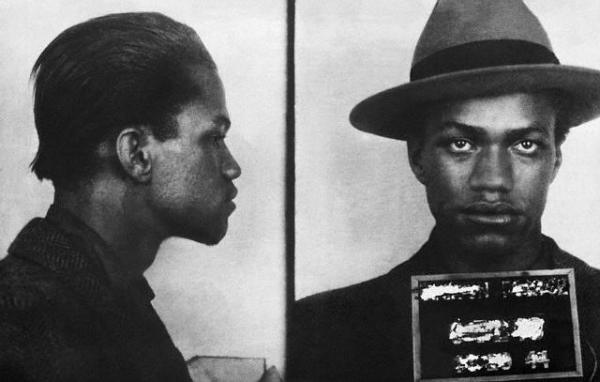 |
| Malcolm Little, circa 1944 |
Wayne is not a Malcolm X or a Martin Luther King, but he does have the potential to be a man who has a positive effect on the world. As Dr. Watkins stated “Malcolm X is what the caterpillar becomes when he’s grown into a butterfly.”
As corny as it might sound, what WE have to be is the cocoon that helps not only Wayne, but other young men and women transition from that “Caterpillar stage”.

Our young brothers and sisters have potential to be so much more and have a positive effect on the world if only they are educated and guided in the right direction.
Too often, we become so caught up in casting judgment on people we fail to recognize our own room for growth and the fact that their struggle are largely relating to our own.
We’ll think of a million reasons to say why someone is “hopeless” or a “lost cause”, but won’t provide one method of helping people.
Yet as Benjamin Franklin once said, “Any fool can criticize, condemn and complain, and most fools do.”
Therefore, our job is to not only improve upon ourselves but to put effort into loving our misguided brothers and trying to help them… by any means necessary.
Wednesday, March 20, 2013
0 I AM Philadelphia's Youth: Why the inner-city youth's problems are the city's problems
Note:
In January of 2012, I was at home in Philadelphia for winter break. As refreshing as it was to be around family and friends, I also had my memory refreshed as to the harsh realities of the city. By this time, I had already spent nearly five years in the quiet college town of Edinboro, PA, and I almost forgot about the deep rooted social ills which existed in "The City of Brotherly Love".
Violent crime, unemployment and inadequate education were still major problems within the city. I thought to myself, "There are major institutional and structural problems with the city of Philadelphia." Yet, to my surprise, a great deal of the outrage and discontent of many Philadelphians was directed toward the youth of Philadelphia's inner city... or what rapper Tupac Shakur referred to as the "outer city" because of belief that inner city youth are being "left out" of the progression of American society as a whole.
I thought, how can we hate the ones who are merely the product of the life we gave them?
This editorial which I sent to the Philadelphia Daily News, was my reaction to this atmosphere of disdain that I saw toward the youth of Philadelphia.
____________________________________________________________________________________________
Published in The Philadelphia Daily News
January 11, 2012
Every day I hear more
and more talk about the problems of Philadelphia's inner-city youth, from the
summer's violent, rowdy "flash mobs" to more serious crimes. It seems as if,
increasingly, the most common focus of negative media coverage and criticism
when it comes to Philly's problems is our youth. Let it be known, I use the
word "youth" loosely as a term to encompass anyone under the age of
30 who hasn't necessarily reached full maturity.

Now, don't get me wrong - some of this criticism
is well-deserved because, quite frankly, many our youth exhibit horrendous
behavior.
Yet, what baffles me is
how people talk about the youth as if they were savages, as if their problems
are not rooted in our own. What many people fail to understand are the many
societal factors that play a major role in Philly's inner-city youth problems.
Many of these troubled
youths come from dysfunctional homes, where there is minimal parental guidance
in their households. This lack of family role models plays a tremendous part in
a young person's development.
Then, in their
communities there isn't exactly an abundance of role models, either, and many
of the people who become role models are often products of these broken homes
as well.
On top of that, one of
the main problems in Philadelphia that affect the youth is that there is a lack
of community. Many people don't have enough of a bond with the people who live
in their neighborhoods, nor do they care to help these people; consequently,
the youth suffers.
Too often people go on
and on about how we need stricter laws and more police presence to
"help" the youth.
However, what they really need are people who care enough to understand them.
However, what they really need are people who care enough to understand them.
Too often, people will
put so much energy into criticizing and looking down on the youth but put no
energy into making steps to actually help them up.
But, as Philadelphia's
own Benjamin Franklin once said, "Any fool can criticize, condemn and
complain, and most fools do."

We don't need any more
people sitting around talking about how "crazy" or how much of a
"disgrace" the youth are - that's unproductive. What Philadelphia
needs are people who care and are willing to put time and effort into helping
our communities.
This means that we need
our parents, our coaches, our teachers, our clergy, our college students to
step up and help our communities. We have more power than we think, and
together we could change this city for the better.
Most importantly, our
youth need love. As the esteemed scholar Dr. Cornel West once stated, "You
can't lead the people if you don't love the people. You can't save the people
if you don't serve the people."

Our inner-city youth are
talented and full of promise. The only problem is that many of them have yet to
realize that. They just need people to help them to cultivate their potential
and discover the greatness in themselves.
How do I know this?
Well, I am
Philadelphia's youth.
I was born and raised in
Philadelphia and I was a product of both the public- and parochial-school
systems.
Today, I'm a 21-year-old
graduate student at Edinboro University, in Pennsylvania, and my successes are
largely due not only to the guidance of my parents, but the countless people in
my community who helped to push me in the right direction.
I love Philadelphia and
I love the people who live here, and I want to make this city better because it
is inevitably a part of me. I hope that I'm not the only one who feels this
way.
I mean, since we are the
"City of Brotherly Love," let's try living up to the name.
Tuesday, March 19, 2013
0 Is The History Channel making us stupid?
I used to give the History Channel the benefit of the doubt.
Nowadays, I just doubt its benefit.
As a teen, my began to become increasingly interested in history. I loved to watch
documentaries on various historical events and time periods on The History Channel. I was even willing
to overlook some of The History Channel's faults because of my love of history.
Its Eurocentric bias in the interpretation of history? I was able to look
past that.
It's extensive, almost obsessive focus on WWII and the rise
of Hitler? I could deal with that.

Its tendency to show historical events from a romanticized,
myopic, "America's always the hero" point of view? I kind of expected it.
But lately The History Channel seems to be just getting more
and more ridiculous with its programming, almost to the point of insulting to the
intelligence of its viewers.
I have numerous problems with the History Channel, the first
one being that there are far too many reality shows. Now don't get me wrong, I
enjoy some of their reality shows. In fact, I was a big fan of the first few
seasons of The History Channel's show Pawn Stars.

Yet, when reality shows which
have very little to do with history, such as Ice Road Truckers, dominate the
channel that is supposed to teach people about History we have a problem.
Slowly but surely, it seems as if The History Channel is
selling out for the sake of entertainment rather than education. This seemingly
proved true in one of their more recent "historical" series called
The Bible.
First off, the whole idea of having a predominately European
cast for a 21st century TV series about biblical history is ridiculous in of
itself. Now I already know what my "colorblind" readers
are thinking: Who cares what ethnicity the actors are, does it really matter? Well, from a historical accuracy standpoint, it does.
Would it matter if someone made a movie with a Chinese actor
playing George Washington? Would it matter if Steven Spielberg made a movie about
Napoleon Bonaparte starring Jamie Foxx? Would it matter if someone cast Chris Rock as Christopher Columbus? Of course it would, mainly because it would look silly and
historically inaccurate.
Another interesting aspect of this show is that Satan (who apparently
just pops up and makes appearances every once in a while) is played by a
Moroccan actor, who many believe to resemble President Obama. Yet, the
History Channel wrote this off as simply being an unfortunate coincidence.
But one of the silliest shows on History is Ancient Aliens. The
show uses the idea of ancient human-extraterrestrial contact to explain
archaeological and historical "mysteries."

For example, the show claims that the Pyramids of Giza and
other historic structures were created by aliens to be a "world grid" of electromagnetic
energy. First off, if people believe in stuff like this, they might
as well believe in the tooth fairy, the boogeyman and the Easter bunny.
Not only is the whole premise of the show "Ancient
Aliens" ridiculous, its offensive to the legacy of the work of indigenous
cultures all over the world. It indirectly assumes that indigenous people of
Asia, Africa, the Americas were weren't sophisticated or intelligent enough to
create structures and artifacts which we, the all-knowing western world, can't
fully understand.
Therefore the most intelligent theory that the folks at The
History Channel come up with is:

Here's my theory: Maybe people were just intelligent enough to build
structures that stood the test of time, maybe those indigenous people weren't
as primitive and uncivilized as we'd like to think. Maybe people revolutionized
science and architecture before America did. (Try Googling: History of science
and technology in Africa).
Or maybe we just aren't able to understand EVERYTHING.
But what I do understand is why people are largely
misinformed about the world and about each other. We've been taught wrong; from the
myopic, whitewashed history textbooks of America's schools, to the ridiculous
"historical" programming in the media.
But, in the timeless words of the rapper Nas, “It’s all
poison.”
The solution all of this is to learn history independently,
we have to pick up the books, do the research and find good historical
documentaries on our own.
We must remember, history is a subject which we shouldn't
take lightly. After all, a society without true knowledge of the past can
never fully understand the present nor prepare for the future.
Subscribe to:
Posts (Atom)


