Thursday, March 28, 2013

0 From Malcolm Little to Lil' Wayne


Note: This editorial was originally sent to the hip-hop website "AllHipHop.com" following the backlash of an editorial by social commentator and author, Dr. Boyce Watkins which was published on their site. In the editorial, Watkins examines the parallels of the lives of a young Malcolm X and Lil' Wayne, from a sociological perspective, discussing how they were both products of a similar social structure (Click here to read Dr. Watkins' editorial)

Yet, Watkins editorial was met with an overwhelmingly negative response from readers who found the thought of even comparing Lil' Wayne's life to Malcolm X's to be an insult.

Me, feeling as if most readers completely missed Watkins point, decided to write a response editorial to AllHipHop.com.

Yet, the editors of AllHipHop.com never published the editorial nor did they respond to my email.

Here's what I had to say:

Apparently a lot of AllHipHop.com readers were up in arms after reading Dr. Boyce Watkins’ editorial “What Lil Wayne has in common with Malcolm X”. Many people responded with a sentiment of outrage, saying things like, “How dare he compare Lil Wayne to Malcolm X!” or “This article is a disgrace!” 

Some even went as far as to diss Dr. Watkins personally, one reader called him “a f*cking idiot”.

These comments revealed to me a big problem of today which is the fact that in the era of internet journalism, many people don’t a) actually READ ARTICLES FULLY, nor do they b) think critically and analyze what they read.

Of course Lil' Wayne is no Malcolm X, that’s obvious. Malcolm X was one of the biggest champions for African American people as well as one of the greatest minds of the 20th century, hands down. But that wasn’t the point that Dr. Watkins was trying to make.


Dr. Watkins wasn’t saying that we should look up to Lil' Wayne as we do Malcolm X.

He wasn’t saying that their messages are similar.

He wasn’t saying that their early lives are completely similar.

If people actually took the time to read and understand what Dr. Watkins was saying they’d realize he was making an even deeper point. Importantly, he was stating that Lil Wayne is a product of the same system that developed a young Malcolm X.

Some might say, “How in the world is Wayne a victim of the system? He’s rich.”

Well, contrary to common belief, being rich is not the same thing as being free. As Chris Rock once said “Rich is some sh*t you can lose with a crazy summer and a drug habit.”

Lil' Wayne is a victim of the mentality which living in the poor conditions of America’s inner city creates within many Black men. He grew in one of the most impoverished areas of New Orleans, embraced gang culture, had few positive male role models as a young man and he’s become a victim of America’s drug addiction culture.

So, it shouldn’t be any surprise that a lot of his music reflects negative images, this is what he knows and was raised on.

Dr. Watkins’ point is not to say that we should feel sorry for Wayne and not hold him accountable for his message. He’s saying that there is potential to push Wayne in a positive direction. 

But of course, naysayers will say “it’s not possible” or say “he’s a lost cause”, yet ironically, at one time people probably said the same thing about another young man.

This young man, like Wayne, lost his father at a young age, abused drugs, embraced the lifestyle of the streets and even did prison time. 

However, while he was in prison, this young man had people who saw his potential and stepped in to help him change for the better.

This young man would go on to become the man we know as Malcolm X.
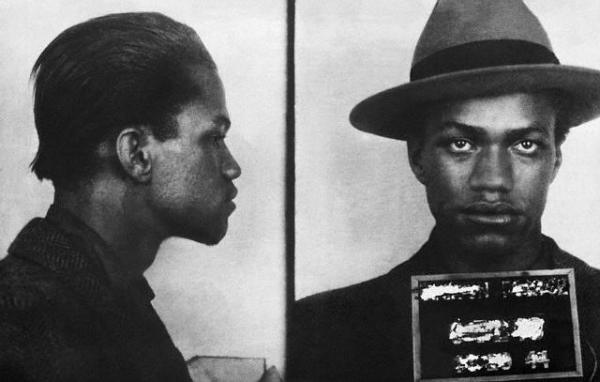
Malcolm Little, circa 1944

Wayne is not a Malcolm X or a Martin Luther King, but he does have the potential to be a man who has a positive effect on the world. As Dr. Watkins stated “Malcolm X is what the caterpillar becomes when he’s grown into a butterfly.”

As corny as it might sound, what WE have to be is the cocoon that helps not only Wayne, but other young men and women transition from that “Caterpillar stage”.


Our young brothers and sisters have potential to be so much more and have a positive effect on the world if only they are educated and guided in the right direction.

Too often, we become so caught up in casting judgment on people we fail to recognize our own room for growth and the fact that their struggle are largely relating to our own.

We’ll think of a million reasons to say why someone is “hopeless” or a “lost cause”, but won’t provide one method of helping people.

Yet as Benjamin Franklin once said, “Any fool can criticize, condemn and complain, and most fools do.”

Therefore, our job is to not only improve upon ourselves but to put effort into loving our misguided brothers and trying to help them… by any means necessary.

Wednesday, March 20, 2013

0 I AM Philadelphia's Youth: Why the inner-city youth's problems are the city's problems


Note:
In January of 2012, I was at home in Philadelphia for winter break. As refreshing as it was to be around family and friends, I also had my memory refreshed as to the harsh realities of the city. By this time, I had already spent nearly five years in the quiet college town of Edinboro, PA, and I almost forgot about the deep rooted social ills which existed in "The City of Brotherly Love". 
Violent crime, unemployment and inadequate education were still major problems within the city. I thought to myself, "There are major institutional and structural problems with the city of Philadelphia." Yet, to my surprise, a great deal of the outrage and discontent of many Philadelphians was directed toward the youth of Philadelphia's inner city... or what rapper Tupac Shakur referred to as the "outer city" because of belief that inner city youth are being "left out" of the progression of American society as a whole.
I thought, how can we hate the ones who are merely the product of the life we gave them?  
This editorial which I sent to the Philadelphia Daily News, was my reaction to this atmosphere of disdain that I saw toward the youth of Philadelphia.
____________________________________________________________________________________________
Published in The Philadelphia Daily News
January 11, 2012
Every day I hear more and more talk about the problems of Philadelphia's inner-city youth, from the summer's violent, rowdy "flash mobs" to more serious crimes. It seems as if, increasingly, the most common focus of negative media coverage and criticism when it comes to Philly's problems is our youth. Let it be known, I use the word "youth" loosely as a term to encompass anyone under the age of 30 who hasn't necessarily reached full maturity.

Now, don't get me wrong - some of this criticism is well-deserved because, quite frankly, many our youth exhibit horrendous behavior.

Yet, what baffles me is how people talk about the youth as if they were savages, as if their problems are not rooted in our own. What many people fail to understand are the many societal factors that play a major role in Philly's inner-city youth problems.
Many of these troubled youths come from dysfunctional homes, where there is minimal parental guidance in their households. This lack of family role models plays a tremendous part in a young person's development.
Then, in their communities there isn't exactly an abundance of role models, either, and many of the people who become role models are often products of these broken homes as well.
On top of that, one of the main problems in Philadelphia that affect the youth is that there is a lack of community. Many people don't have enough of a bond with the people who live in their neighborhoods, nor do they care to help these people; consequently, the youth suffers.
Too often people go on and on about how we need stricter laws and more police presence to "help" the youth.
 However, what they really need are people who care enough to understand them.
Too often, people will put so much energy into criticizing and looking down on the youth but put no energy into making steps to actually help them up.
But, as Philadelphia's own Benjamin Franklin once said, "Any fool can criticize, condemn and complain, and most fools do."

We don't need any more people sitting around talking about how "crazy" or how much of a "disgrace" the youth are - that's unproductive. What Philadelphia needs are people who care and are willing to put time and effort into helping our communities.
This means that we need our parents, our coaches, our teachers, our clergy, our college students to step up and help our communities. We have more power than we think, and together we could change this city for the better.
Most importantly, our youth need love. As the esteemed scholar Dr. Cornel West once stated, "You can't lead the people if you don't love the people. You can't save the people if you don't serve the people."

Our inner-city youth are talented and full of promise. The only problem is that many of them have yet to realize that. They just need people to help them to cultivate their potential and discover the greatness in themselves.
How do I know this?
Well, I am Philadelphia's youth.
I was born and raised in Philadelphia and I was a product of both the public- and parochial-school systems.
Today, I'm a 21-year-old graduate student at Edinboro University, in Pennsylvania, and my successes are largely due not only to the guidance of my parents, but the countless people in my community who helped to push me in the right direction.
I love Philadelphia and I love the people who live here, and I want to make this city better because it is inevitably a part of me. I hope that I'm not the only one who feels this way.
I mean, since we are the "City of Brotherly Love," let's try living up to the name.


Tuesday, March 19, 2013

0 Is The History Channel making us stupid?


I used to give the History Channel the benefit of the doubt. Nowadays, I just doubt its benefit.

As a teen, my began to become increasingly interested in history. I loved to watch documentaries on various historical events and time periods on The History Channel. I was even willing to overlook some of The History Channel's faults because of my love of history.

Its Eurocentric bias in the interpretation of history?  I was able to look past that.

It's extensive, almost obsessive focus on WWII and the rise of Hitler? I could deal with that.


Its tendency to show historical events from a romanticized, myopic, "America's always the hero" point of view? I kind of expected it.

But lately The History Channel seems to be just getting more and more ridiculous with its programming, almost to the point of insulting to the intelligence of its viewers.

I have numerous problems with the History Channel, the first one being that there are far too many reality shows. Now don't get me wrong, I enjoy some of their reality shows. In fact, I was a big fan of the first few seasons of The History Channel's show Pawn Stars. 


Yet, when reality shows which have very little to do with history, such as Ice Road Truckers, dominate the channel that is supposed to teach people about History we have a problem.

Slowly but surely, it seems as if The History Channel is selling out for the sake of entertainment rather than education. This seemingly proved true in one of their more recent "historical" series called The Bible.

First off, the whole idea of having a predominately European cast for a 21st century TV series about biblical history is ridiculous in of itself. Now I already know what my "colorblind" readers are thinking: Who cares what ethnicity the actors are, does it really matter? Well, from a historical accuracy standpoint, it does.

Would it matter if someone made a movie with a Chinese actor playing George Washington? Would it matter if Steven Spielberg made a movie about Napoleon Bonaparte starring Jamie Foxx? Would it matter if someone cast Chris Rock as Christopher Columbus? Of course it would, mainly because it would look silly and historically inaccurate.

Another interesting aspect of this show is that Satan (who apparently just pops up and makes appearances every once in a while) is played by a Moroccan actor, who many believe to resemble President Obama. Yet, the History Channel wrote this off as simply being an unfortunate coincidence.

But one of the silliest shows on History is Ancient Aliens. The show uses the idea of ancient human-extraterrestrial contact to explain archaeological and historical "mysteries."


For example, the show claims that the Pyramids of Giza and other historic structures were created by aliens to be a  "world grid" of electromagnetic energy. First off, if people believe in stuff like this, they might as well believe in the tooth fairy, the boogeyman and the Easter bunny.

Not only is the whole premise of the show "Ancient Aliens" ridiculous, its offensive to the legacy of the work of indigenous cultures all over the world. It indirectly assumes that indigenous people of Asia, Africa, the Americas were weren't sophisticated or intelligent enough to create structures and artifacts which we, the all-knowing western world, can't fully understand.

Therefore the most intelligent theory that the folks at The History Channel come up with is:


Here's my theory: Maybe people were just intelligent enough to build structures that stood the test of time, maybe those indigenous people weren't as primitive and uncivilized as we'd like to think. Maybe people revolutionized science and architecture before America did. (Try Googling: History of science and technology in Africa).

Or maybe we just aren't able to understand EVERYTHING.

But what I do understand is why people are largely misinformed about the world and about each other. We've been taught wrong; from the myopic, whitewashed history textbooks of America's schools, to the ridiculous "historical" programming in the media.

But, in the timeless words of the rapper Nas, “It’s all poison.”

The solution all of this is to learn history independently, we have to pick up the books, do the research and find good historical documentaries on our own.

We must remember, history is a subject which we shouldn't take lightly. After all, a society without true knowledge of the past can never fully understand the present nor prepare for the future.

Thursday, March 7, 2013

3 Do we really value our education?


Published in The Edinboro Spectator: March 7, 2013

Dedicated to memory of LaQula Walker (1989-2013)

A few days ago I was on Facebook when I saw a status post from an old friend that caught my eye. This friend was a former Edinboro University student who came here around the same time that I did, lived in my residence hall, except he didn’t graduate. He spent most of his time here partying, hanging out and doing other “extracurricular activities.” He was intelligent but he wasn’t focused.

On his Facebook status, he spoke about how much he should have valued his time here in Edinboro instead of a viewing it as a place for partying and leisure. He explained how he’s now at a smaller university where the atmosphere is much different than that of Edinboro. His current school, he claims, is a “degree factory” where many of the classes are boring and don’t really engage students.

This thoughtful, reflective post made me think about some student here at Edinboro today. I thought to myself, “Do people really value their opportunities here?”

Sometimes, I even have to ask that question about myself.

Often, people view college as a vacation. They see it as free time to have fun and “live it up”.

Yet, in this quest for fun, excitement, a new “high” and attention, people forget the real purpose of college, which is to get an education.

Make no mistake about it, there is nothing wrong with having a little fun every now and then, yet we have to have balance and remember what our priorities are.

I’ve had my years where I partied more than I more than I studied, but then I grew up.

These days it is hard for me to live that lifestyle, mainly because I know that my college education is bigger than me. I’m not doing this just for myself.

I do it for my ancestors who would have died (literally) for some of the educational opportunities that I’ve been blessed to have.

I do it for my family members who grew up in the Jim Crow South and had to walk miles to go to school.

I do it for my great grandparents who grew up in the Great Depression and never got the opportunity to go to college.

Ultimately, I do it for the future, for my younger brother and sister, for the kids in the inner city, the suburbs and in the country, who want to be better than the world tells them that they are.

By me not honoring my opportunity to learn, I dishonor the dreams of all of these people.

Last year, I met a remarkable young woman who opened my eyes to the importance of making the most out of our opportunities.

She was a graduate student here at Edinboro University who was ambitious, driven, and had wisdom beyond her years; this young woman’s name was LaQula Walker.

She valued her education and knew that she had an opportunity to become something much greater. She would tell me about her dreams of attending law school and changing the world.

Sadly, a week ago, LaQula passed away at the young age of 23, just a few months shy of graduation, as she was close to reaching the prime of her life. Yet, as sad her passing was, it opened my eyes and caused me to ask a profound question.

I asked myself, “If we’re still here, and we’re blessed with the gift of life and have a chance to learn and to make something of ourselves, what is our excuse to take that for granted?”

Maybe that’s a question which we all need to ask.

Friday, February 22, 2013

0 Does History Really Matter?


By: Marvin DeBose
Published in The Edinboro Spectator, Feb. 21st, 2013


"A people without the knowledge of their past history,
origin and culture is like a 
tree without roots" -Marcus Garvey


It can be said that seeing the curiosity and vibrancy of the youth can cause us to become more reflective of ourselves and of life in general.

I remember when I worked in a summer camp in Philadelphia about 3 years ago when I heard something from a young teen that struck my mind and caused me to reflect on many things. I was talking to a group of young camp counselors, most of them around the ages of fifteen and sixteen, while on the bus en route to a camp trip.

Somehow, one of the young counselors (who we’ll call John) mentioned the renowned poet, Maya Angelou, to which one of the young counselors, (who we’ll call Dave) responded “Who is that?”

The other counselors, in shock, asked him “You don’t know who Maya Angelou is?” Dave unashamedly responded, “No.”

John, with a shocked, semi-disgusted look on his face, began to question him, “How don’t you know Maya Angelou, don’t you know any history?” 

Dave looked John in the eye and said said something that blew me away, he said, “I don’t care about history, that’s not helping me, who cares about what happened back in the day?”

Me, being a 20-year old college student at the time, a history buff, and naturally, one of the elders of the group, I felt compelled to step in and try to “school the young brother”, as we say in Philly.
I told him, “Learning history gives you an understanding of the world around you, you gotta learn that stuff, man.”

Yet, Dave looked at me and still seemed unmoved by my attempt to “school him”, which probably came off to him as corny and preachy as a Saturday morning cartoon PSA.

This moment caused me to think, “Do we really understand the importance of history?” Fast forward to 2013, and I think to myself, “Apparently not.”

A wise man once said, "Wise people study history, because if you don't understand what was, then you can't understand what is, and you're ill-prepared for what is yet to come." Today, I clearly see where people overlook history, it’s evident in their analysis (or lack thereof) of today’s world.

We cannot make sense of the world as it is because we’ve failed to analyze the world as it was. This is part of the reason why we don’t really understand issues like discrimination, violence, poverty, inadequate education and war. We must realize that as a society, every issue, every triumph and every failure we face is rooted in   history and therefore we must study it.

This is the reason why I read books on history voraciously.

This is why I took about 7 history classes in my undergrad years, while my major was journalism.

This is why I respect people like Edinboro University professors, Dr. Joseph Laythe, Prof. Umeme Sababu, Dr. Martha Donkor, and Dr. Dennis Hickey because not only do they teach history, but they critically analyze it and help us understand its relevance to today.

So if I ever have the opportunity to speak to Dave from the summer camp again, I’ll tell him why history matters.

I’d tell him, “All history is relevant and connected to you, what happens today is a product of what happened yesterday, even you are a product of the actions of others, if you don't believe me, just ask your parents.”

Tuesday, February 19, 2013

0 You Gonna Learn Today: When Kevin Hart came to the Boro


Kevin Hart may a household name for comedy fans today, but in early 2011, he was still working his way up in the world of comedy.
That summer, his show "Laugh At My Pain" went on to break records grossing over $2 million and setting a record as the best performing concert series since Martin Lawrence's Live: Runteldat in 2002. By the end of 2011, Kevin Hart was solidified as a top star in comedy. 
But on April 2nd 2011, after bring down the house at Edinboro University, performing his then-new "Laugh At Pain" comedy show, Hart sat down (while joking about the tartan couch on which he sat, he sarcastically remarked, "Wow, a plaid couch, this is nice.") and he talked with me and two of my fellow Edinboro students who would also become successful in their own right in the years to come: Andre Roberts and Jessica Kunz.
Here's what he had to say...
(L-R Andre Roberts, Kevin Hart, Me)
"Make sure y'all make me look tall in the interview." -Kevin Hart
 
By: Marvin DeBose & Andre Roberts
Published on EUPSpectator.com April 2011
 
On April 2nd, 2011, Edinboro University got a when comedian, Kevin Hart brought his “Laugh At My Pain” comedy tour to a packed crowd at the McComb Fieldhouse.

Following the show, Hart sat down and spoke with The Spectator and ETV reporter, Jessica Kunz, discussing his comedic beginnings, his family, and even his plans for the future.

Hart, a Philadelphia native stated that his early life in “The City of Brotherly Love” is what made him who he is. “Philadelphia molded me into becoming the man that I am today,” Hart said.  “It’s a tough city and getting respect from your peers there was a big deal”

It was also in Philadelphia where Hart spent his college years. He briefly attended Temple University and Community College of Philadelphia. Not long into his college career, Hart realized that he should take a different path.

“Anytime you fail a pop quiz in community college… education might not be the thing for you,” Hart said. “I couldn’t go to school and help provide so I got a job to help out my mom.”

Consequently, Hart worked as a shoe salesman in sneaker stores to help pay the bills, he even claimed to be so good at his job that if it weren’t for comedy, he’d probably be working for Nike.

However, comedy was in his blood, so with the advice of a few friends, Hart started doing standup comedy at amateur nights throughout the city and eventually quit his job to assertively pursue a career in comedy.

But apparently, the city of Brotherly Love didn’t have to much love for a young comedian trying to get into the business, Hart recalled some of the roughest times he had in Philly when he first got into comedy.

“People have thrown buffalo wings at me at one point,” Hart said. “I remember one time I got hit in the head with a Lemonhead candy because this guy was so mad at my jokes.”

Hart also stated that some of his biggest influences were comedians like Richard Pryor, Eddie Murphy, Redd Foxx, and Sinbad. However, he held one particular comedian to an even higher standard.

“I think my biggest influence is probably Chris Rock, he’s probably one of the smartest businessmen out there… he’s a self-made mogul,” Hart said. “He goes above and beyond the word ‘success’.”

Success is something which Hart would see in his career as he started work bigger venues and eventually earned movie roles in films like Soul Plane, Death at a Funeral, and Little Fockers. These days, he’s touring all over the country, is set to star in multiple films, and even has a pilot for a sitcom.

A great deal of Hart’s comedy revolves around his family. Like many entertainers, Hart, a father of two, faced the hardships of working while maintaining a family.

“It’s tough, but you have to understand that you’re doing something that’s not just for yourself, so many people benefit from my success,” Hart said. “My kids reap the biggest rewards from [my work] financially, mentally and emotionally, they have all the support in the world.”

With all of this success, one must wonder how the funnyman from Philly keeps himself grounded.

“I don’t look at the fame or walk around with the attitude of ‘I’m famous, you’re not’,” Hart said. “I think once you do that, you’ve made a transition into the kind of person that people don’t want to win… I try to stay as humble and levelheaded as I can and treat everybody with respect.”

Many fans wonder if Hart will always do stand-ups, since many comedians tend to primarily do movie roles.

“Stand up is what feeds me, that’s my drug, that’s what started everything,” Hart said. “I’m always going to do standup, hopefully they’ll stay funny if they don’t, I apologize.”

Sunday, February 17, 2013

2 NBA Dunk Contest: Get back to dunks, you're celebbing too much

I'm getting tired of the NBA Dunk Contest. 

To me, it seems like every year it gets worse and worse. In fact, I'm having trouble remembering the last time I saw something at a dunk contest that made my jaw drop.

Don't me wrong, I'm not hating on the hard work of the young men of the NBA. I admire and respect their passion and what they do, but from a fan's perspective, from a entertainment perspective, I'm not impressed. I think I've seen more impressive stuff on YouTube.

But the dunk contest is failing miserably and I've come up with a few reasons why:

1) Too much focus on theatrics- A prime example: Last night, James "Flight" White brought out flight attendants and air traffic control personnel for his dunk. At first, it made people (including me) take notice and say "Oh, that's clever". But then, White missed the dunk like 5 times before landing it, which made the whole "flight" theatrics just seem goofy and unnecessary, which brings me to my next point....


2) Not enough focus on perfecting the dunk itself- I'm sick of getting my hopes up for a dunk just to see someone come out and choke. While watching instance like these, I think to myself, "How much did you practice your dunk?"

3) Too much focus on celebrities- I like to see celebs involved in all-star weekend activities, but it seems like when I watch dunk contests, the camera is always checking on what Spike Lee is up to, or what Big Sean seems to think, or what did JJ from Good Times think about the last dunk, or how Little Richard is doing (you never know, he might be there too).


You never know who will show up at the Dunk Contest.


The icing on the cake for me was when I saw the camera show Drake running around on the sidelines after someone's dunk looking as excited like a kid who just got a Charizard in his pack of Pokemon cards. 


I thought to myself, "What does Drake have to do with anything?"


I was just waiting for one of the NBA players on the sidelines to give him a "He doesn't even go here!" (word to the movie Mean Girls).


Basically, the Drake incident combined with other instances of celebrity focus (or celebrity attention-whoring) just caused me to react to many celebs like this guy, 15 secs into this clip from Martin:


But on a positive note, let's try to get back to what the dunk contest used to be, let's make it less about Drake, less about corny theatrics, less about Charles Barkley ripping on the NBA players' fashion choices (scratch that, keep Charles Barkley, he's hilarious, or as he'd say, "Hil-lurious")...


Turrible, just Turrible.

... and more about the point of the slam dunk contest, which is the art of the dunk. Simple and plain, no need for all the extra stuff.

Pages - Menu

The Mind of Marvin Copyright © 2011 - |- Template created by O Pregador - |- Powered by Blogger Templates