Saturday, July 13, 2013

0 Philly Basketball Players Come Back to Teach Life Skills


By: Marvin DeBose


In Philadelphia, a city with a huge emphasis on athletics, it’s not too often that people see athletic skills and life skills taught in conjunction with one another.

However, on Sunday, June 30th, at Finley Recreaction Center, about 20 Mt. Airy kids, ranging from ages 6-15, witnessed an exception to that rule, at the 3rd “Players Helping Players” free basketball clinic.

The program was largely coordinated by William Logan, a Mt. Airy/West Oak Lane resident who grew up playing basketball at Finley Recreation Center. Logan played under the tutelage of Mt. Airy basketball coaches, Marvin DeBose Sr. and Bob Pembleton in the early 2000s and went on to earn his Bachelor’s degree from Lockhaven University in Sports and Fitness administration and his Master’s from St. Louis University in Concentration Sports Management.

Logan, who is currently the assistant men’s basketball coach at the University of Bridgeport in Connecticut, discussed the importance of this program.

“It’s important for people who had success through [the Finley Basketball program] come back and give back,” Logan said. “We to continue to have something positive going on in the community.”

Shooting, passing, defense and other high-energy drills focusing on basketball fundamentals were the main activities in the 2-hour clinic, largely with the assistance of the program’s facilitators Jordan Ingram, a basketball coach at Mercer County Community College in Trenton, NJ. and Kevin Smith, another former Finley player who’s now a mathematics teacher for Universal Companies in South Philadelphia.

Ingram, once a standout basketball player for Archbishop Carroll, as well as a player for Fairleigh Dickinson University, noticed a direct correlation between one’s development as a basketball player and one’s personal development.

“Learning how to work with people, learning that it not all about me,” Jordan stated, are some of the life lessons which basketball helps to reinforce. “In high school I didn’t always have the best relationship with teammates, but the job had to be done.”

Smith, who, like Logan, started playing under DeBose and Pembleton at Finley at the age of 14, also drew parallels between athletics and life skills

“Coaching [both on and off the court] plays a big role, it comes down to teaching young players the right thing and how to be not only better players, but better people,” Smith said.

The event was culminated with motivational speeches on the importance of academics and life skills from numerous former players and coaches. Players spoke on the importance of giving back their communities, as well as academic excellence, and hard work and dedication, both on and off of the court.

“It’s not about finding the most talented players and talking to them about how talented they are.” Ingram said. “No let’s focus on picking up books and your academics.”

To further emphasize the academic message of the program, players were also given a selection of countless books to take home, sponsored by the Free Library of Philadelphia. DeBose Sr., the former Finley Rec coach of Logan and Smith, who now works as a librarian for the Free Library of Philadelphia, helped to provide and distribute the books.

The coaches of the “Players Helping Players” clinic hoped that the program was effective in  not only linking life skills and basketball but giving the youth a positive, ambitious outlook.

“You’re not gonna win every game, just like you’re not gonna win in life all the time,” Logan said, “But you have to come back working hard and fighting and eventually you’ll get to where you want to be.”

Saturday, July 6, 2013

0 An Open Letter to Morgan Freeman

By: Marvin DeBose


Note: Regardless if Mr. Freeman ever reads this or not, this is a message which many people need to read.


Dear Mr. Freeman,

I hope that this message finds you in great health and high spirits. I think it goes without saying that you're undoubtedly one of the most talented actors that I've ever seen. Your movies are classics, and the word "iconic" is an understatement when it comes to describing some of the characters that you've played over the years.

Not only do I respect you as an actor, I also respect your perspective and your opinion as an African-American man who grew up in the era of Jim Crow segregation. I'm sure you've faced discrimination far more dehumanizing and humiliating than I may ever experience.

However, I must respectfully disagree with a statement that you made some years back in a 60 Minutes interview. In the interview, the late, talented journalist, Mike Wallace asked you a rather complex question, he asked, "How do we get rid of racism?"

You promptly stated that the best way to get rid of racism was to "Stop talking about it."

You elaborated by saying "I’m going to stop calling you a white man. And I’m going to ask you to stop calling me a black man. I know you as Mike Wallace. You know me as Morgan Freeman."

I found these views as dangerous in today's America because in a world where hate crimes, the explosion of the prison industrial complex, police brutality, racial profiling and discrimination in housing, jobs, education and politics still exist, America still has a rather immature view of race and the role it plays in our lives. Some of the most apparent symbols of this are seen in our language.

For example, just look at a phrase like, "Playing the race card". Such a phrase would imply that people who discuss race are merely insincere opportunists who use their race as some sort of Monopoly-esque "Community Chest" card.

But life is no game, and my mentions of racism won't allow me to "Pass Go" and Collect $200, nor will my race ever be a "Get Out of Jail Free Card" (In fact, it may be a Get Into Jail Free Card).

So, saying "Stop talking about it" basically allows those immature beliefs to be reinforced and it suggests that the best way to combat racism is to pretend it doesn't exist, which many people already do... and have been doing.

One of the few cases in which silence might work to solve a problem is if you're trying to put a baby to sleep. But America isn't baby anymore, and its citizens have been "sleeping" long enough. A more adequate analogy of America would be that of an unruly child, who needs to be taught why certain behaviors are problematic in order to correct those behaviors.

If your character from the movie Lean on Me, Joe Clark, decided to solve the problems of the dysfunctional Ease Side High by simply not talking about them, Lean on Me would have been a very different movie, to say the least.

Implying that race and racism are things which we just shouldn't talk about about gives the impression that these aren't real issues in the world. Despite the fact that race is a social construct, racism is something that is very real, especially in its consequences.

Many people are uncomfortable with discussing issues of race because they're afraid to offend people, some don't feel as if it affects them, and some don't discuss issues of race because it may challenge some of the beliefs which they, or people close to them, have internalized. 

Many people may even be uncomfortable reading this letter and it may make some people angry. But most growth comes from discomfort, so if they are uncomfortable and/or angry, it means they probably read something that was true.

But, I believe that any injustice, whether its based on race, religion, political beliefs, sexual orientation or nationality, requires courageous, loving individuals to have an honest discussion about it. People need to talk more about racism, and not only that, they need to learn about its history, and act on it productively.

Poverty won't go away by silence. Not talking about cancer or AIDS doesn't ensure a cure for the many people affected by those diseases. Wars certainly do not end by people not discussing them.

Mr. Freeman, silence doesn't eliminate societal problems, it just perpetuates them, and race is no exception.


P.S. You have one of the best voices I've ever heard.

Sincerely,

Marvin DeBose

Tuesday, July 2, 2013

2 What Happened to Reading?


By: Marvin DeBose

I have a long history when it comes to reading. As a young child, my mother would buy me countless "Read Along" books that came with cassettes that I'd play on my Playskool tape recorder.

My father also was a huge influence on my reading habits as well. He'd read newspapers daily as well as countless books on history, ranging from books on the Moors in Spain to the history of the mafia. As fate would have it, he eventually became a librarian for the Free Library of Philadelphia, one of the largest public library systems in the world.

Needless to say, books have played and still play a tremendous role in my life.

When I got to college at Edinboro University, at one point I'd make it a habit to get a new book from the library every Friday afternoon after classes. I'd read biographies, books on history, politics, sociology, business, self-improvement and many other topics as well.

Many people couldn't comprehend why I'd read even more literature than I had to, after all, we already had to read for classes. But I saw this reading as a necessity, sort of a mental exercise... as well as a waste of money to not make use of the seven-story campus library which I was already paying for out of my student fees.

For me, reading was something that I felt I had to do in order to help me to grow as a person. That's probably why it confused me when I'd hear adults, many of them being college students, say things like, "I don't read."

This is a point that I can't emphasize enough; We have to read.

I'm not talking about just reading any garbage that you can get your hands on, because just like there is garbage on TV, there is garbage in some books as well. But my point is to read things that are worth your time, things which will enlighten you, that will help you to grow, and that will help you to be extraordinary at your craft, whatever it may be. 

We also have to take the time to read things which may challenge our own preconceptions and our own perspective.

I believe that as citizens of this world, we also have a responsibility to learn about the world as well as how we fit into it and how we can improve it. So, we have to read about cultures different than ours, countries outside of our own, and people from different walks of life than us.

In a world full of so much misunderstanding and ignorance, would it really hurt to have more readers in the world?

So, READ... and don't say that you don't have time, make time. Turn off the TV, turn off the computer, party less and limit the video game time. The world needs more informed, analytic, reflective people.

As Napoleon Bonaparte once said, "Show me a family of readers, and I will show you the people who move the world.” 
  

Marvin's recommendations
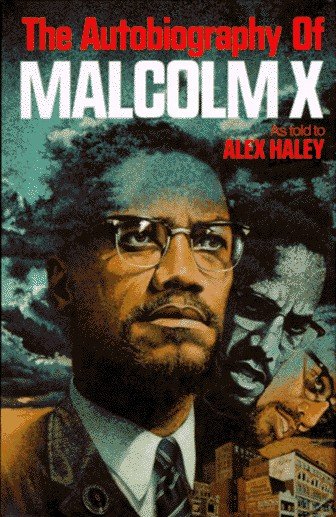
The Autobiography of Malcolm X by: Alex Haley


48 Laws of Power by: Robert Greene


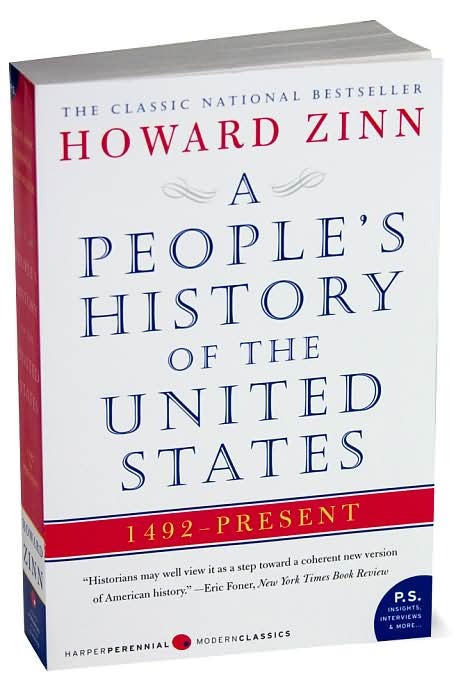
People's History of the United States by: Howard Zinn


Do You! by: Russell Simmons


Lies My Teacher Told Me by: James Loewen


Feel free to share any of YOUR book recommendations in the comments section


Monday, June 17, 2013

1 Yeezy Taught Me: 7 Things I Learned From Kanye West

By: Marvin DeBose


Kanye West is undoubtedly one of the most charismatic, talented, yet misunderstood artists of our generation. Since his rise to stardom in 2003-2004, he has transcended the world of hip-hop music and become a cultural icon. At the same time, he has been the center of a great deal of controversy as well. This week, he drops his controversial, highly-anticipated (despite being leaked) album, Yeezus. Whether you're a fan of him or not, you've got to admit that there is something unique about him which distinguishes him from many musicians of not only his time, but musicians in general... and there are many things which we can learn from him as well...


1. Believe in your work, even when no one else does.

If there's one personal quality which Kanye is known for, it is his confidence, (or his arrogance, depending on who you ask). In his music, his interviews, his rants and nearly everything else that he does, his strong, nearly fanatical belief in himself shines through. Of course, many people look at this with disdain. People call him "cocky", "arrogant" and "egotistical". But few people understand Kanye's confidence within the context of his history.

Before the record sales, before Kim Kardashian, before Amber Rose, before "Imma let you finish but...", before George Bush didn't care about Black people, before the nearly-fatal car accident, before Rocafella Records, Kanye West was just another young hip-hop producer trying to make a name for himself in the music business. 


Interviewers would butcher his name, often referring to him as "Kayne West" or "Conway West". But Kanye being Kanye, would be quick to correct them mid-interview, "Um... that's Kanye West, Kanye."

When he tried rapping in addition to producing, many people told him that he wouldn't make it as a rapper. At the time, hip-hop was polarized, being focused heavily on gritty, street rap or flashy rap. But Kanye West wasn't a conventional rapper, therefore many people including record company execs didn't see his marketability. (Listen to his song "Last Call" from his 1st album, The College Dropout, to hear him tell it) 

Yet, Kanye West continued to believe in himself.

"Now I could let these dream killers kill my self-esteem. Or use my arrogance as the steam to power my dreams." -Kanye West "Last Call"

Even rapper Talib Kweli once commented that Kanye's confidence now is no different from what it was before the fame, in one interview he said, "The way he is now, he was like that before the money and the fame. He was talking about he was the best producer; ‘I’m the best rapper,’... His attitude was exactly the same."

So what people have to understand is that Kanye's confidence is a huge part of what made him a star. If it weren't for that, he probably wouldn't be the Kanye West who we know today.

Maybe we need to learn to take pride in our work and believe in ourselves a little more so we can reach our full potential... And when you put work into what you do, don't you have a right to believe in your abilities and take pride in your work?


2. Work hard to perfect your craft.

"Y'all don't know my struggle, Y'all can't match my hustle
You can't catch my hustle, You can't fathom my love, dude!
Lock yourself in a room doin' five beats a day for three summers
That's a different world like Cree Summer's, 
I deserve to do these numbers" 

-Kanye West "Spaceship"


Michael Jordan, another friend of "the Chi", once said, "Work ethic eliminates fear". Well, a huge part of Kanye West's confidence and his fearlessness as an artist is rooted in his work ethic. From the countless pre-fame summers of doing "five beats a day" as he described in Spaceship, even to doing 12 hours a day in the studio for his album, "My Beautiful Dark Twisted Fantasy", Kanye has always been a workaholic.

Yet, his work ethic is shown in the quality of his music. What he does with his songs and his albums is similar to what an architect does with a skyscraper, what Martin Scorsese does with his movies or what Kobe Bryant does on the court.

You can tell that a great deal of work and focus goes into what he does, and that's something that you cannot help but to admire.


3. Don't wait to get a "foot in the door", kick in the door.

Kanye was never one to wait for people to recognize his talent, he forced people to see his talent. In his pre-fame days he would call music directors of radio stations to get them to play his music, he'd produce the work of countless local, up-and-coming hip-hop artists, and he'd even go on stage and rap during the concerts of  various artists who he'd worked with, such as Talib Kweli, whether he was invited to do so or not.

But eventually, he no longer had to work so hard to become visible as an artist because he had already made a name for himself.

A lot of times we become to passive in waiting for our big break. Yet, through his consistent focus on making himself known as both a rapper and a producer, Kanye went and got his big break.


4. Don't be afraid to speak the truth.

"You can't be afraid to die for the truth. The truth is the only thing that is constant." -Will Smith 


Kanye is one of the most outspoken artists of our time, When it comes to outspokenness entertainers, he's quite similar to what Muhammad Ali was to the Vietnam Era or what Tupac Shakur was to the mid 90s.

Right or wrong, Kanye West tells what he perceives to be the truth. Regardless of how much hostility or controversy he may face as a result.

Now sometimes the way in which he goes about telling the truth is a bit questionable, like the way in which he did with Taylor Swift at the VMAs...


Being unafraid to tell the truth has liberated Kanye in a sense. He's not a slave to his fame, and he's obviously not afraid to piss people off. But more importantly he knows the value of speaking his mind and expressing what he believes to be the truth.

"What more could you ask for? The international asshole
Who complains about what he is owed
And throws a tantrum like he is 3 years-old
You gotta love it through, somebody still speaks from his soul." -Kanye West "Diamonds"


5. Know how to OWN the things which make you different.

As mentioned earlier, Kanye West wasn't a conventional rapper. When everyone was wearing throwback jerseys, making hits with R&B singers on the hook while spitting street-oriented lyrics, Kanye West was the guy in the pink polo shirt with the Louis Vuitton bookbag on.


While many rappers of the time were (some claimed to be) "street dudes", he was the son of a college professor and a former college student. His raps were a complex blend of autobiographical tales, social commentary, braggadocio, humor and wit.  

At first, his differences were not understood, but he didn't care. He didn't change who he was to fit the standards of the industry, he made the industry change to fit his standards. Eventually, he made being "different" cool for many people in the hip-hop industry. As a result, his influence is seen in countless hip-hop artists today. 


6. Be a student of the game.


One of the things which makes Kanye the artist that he is, is his knowledge and love for music and the arts. He once spoke of just listening to countless albums of different artists from all different genres to prepare for one of his albums. He studied the work of producers like No I.D., Timbaland and Dr. Dre when it came to his production career. 

Many people criticize him for using samples in his music, yet, his ability to use samples from songs which often come from more obscure, lesser-known artists of eras pasts, and tying the message of the the sample in with the message or theme of his songs is a talent in itself. 

Kanye's the prime example of the success which can come from studying one's craft.

7. Be groundbreaking

"Did you improve on the design? Did you do something new?
Well your name ain't on the guest list, who brung you?" -Lupe Fiasco

One of the things which has kept Kanye on the top of the game for so long is his ability to keep people guessing by being creative and innovative. Plus, you never know what Kanye is going to say or do as an artist. As his life progresses, his art does the same, and many fans would agree that on every album of his career, there exists an updated version of Kanye.

On top of that, Kanye knows how to do things differently than most artists do. He's a student of visionaries such as Steve Jobs and Walt Disney. Just look at the marketing for his new album, Yeezus. The way in which he premiered his music videos by projecting them onto buildings all over the world was brilliant.


In Conclusion

Despite being one of the most talented artists of our generation, Kanye West is one of the most vilified entertainers of our time, but I ask why? It has to be deeper than just him being the the "cocky rapper".

Personally, I don't think that people hate Kanye West, the person, they just hate something which he represents. Maybe he represents parts of the person which they are too afraid to be, maybe he represents dreams they're afraid to chase, truth they're afraid to accept, confidence they're afraid to have and risks they're afraid to take.

Kanye's no angel, but he's far from the devil that he's often made out to be, but if people were smart, they'd sit back and learn from him.

Monday, June 10, 2013

2 7 Things I Learned From The Godfather


The classic 1972 film, The Godfather, is one of my favorite movies of all time. Aside from the great story and remarkable characters, one of the things which makes me such a huge fan of this movie is the abundance of life lessons and wisdom found in it. The movie is so inspirational for me that I felt the need to share some of the lessons that I learned from it such as...

Lesson 1- Stay focused on your business

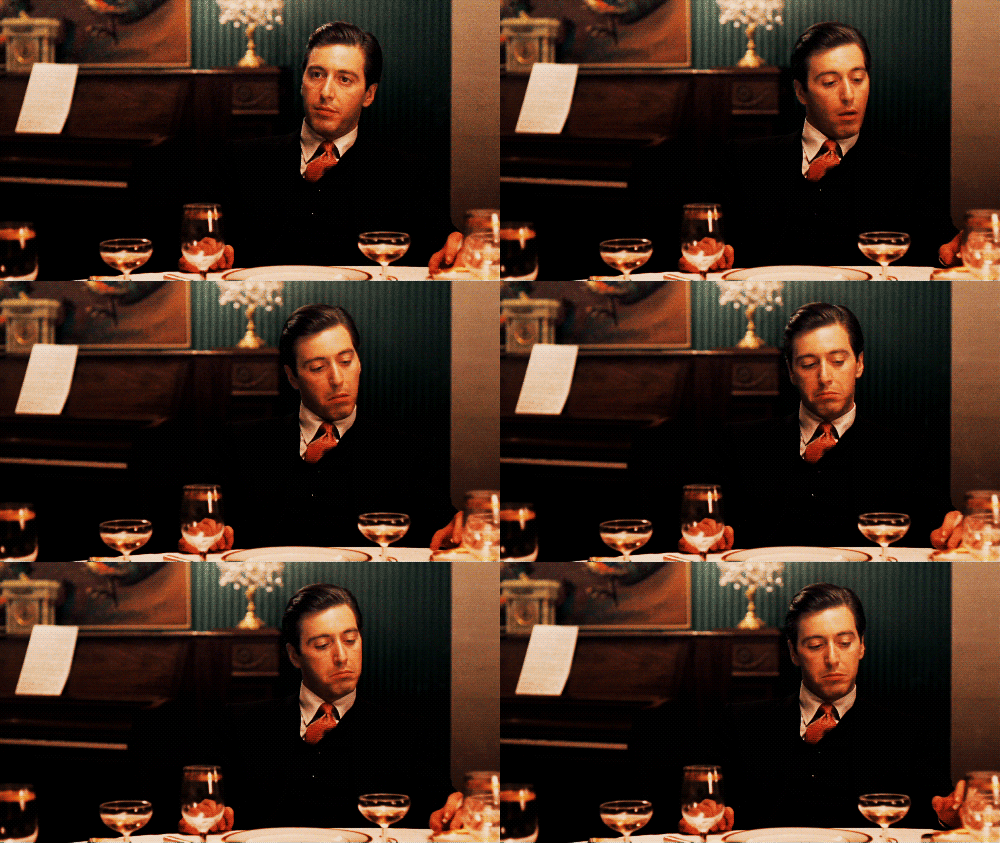
One of the most brilliant scenes of the movie is when Michael Corleone goes to Vegas to meet with mafiosi Moe Greene, to get him to sell him his casino to the Corleone family. But when Michael arrives in Vegas for the meeting his brother Fredo has a party waiting for him along with music, food and his choice of women. But Michael sternly tells him, "Get rid of them... I'm here on business." That type of focus Michael had on his business goals rather than personal indulgences always stood out to me. 

As you can see, Michael is all business.


Lesson 2- Keep your composure

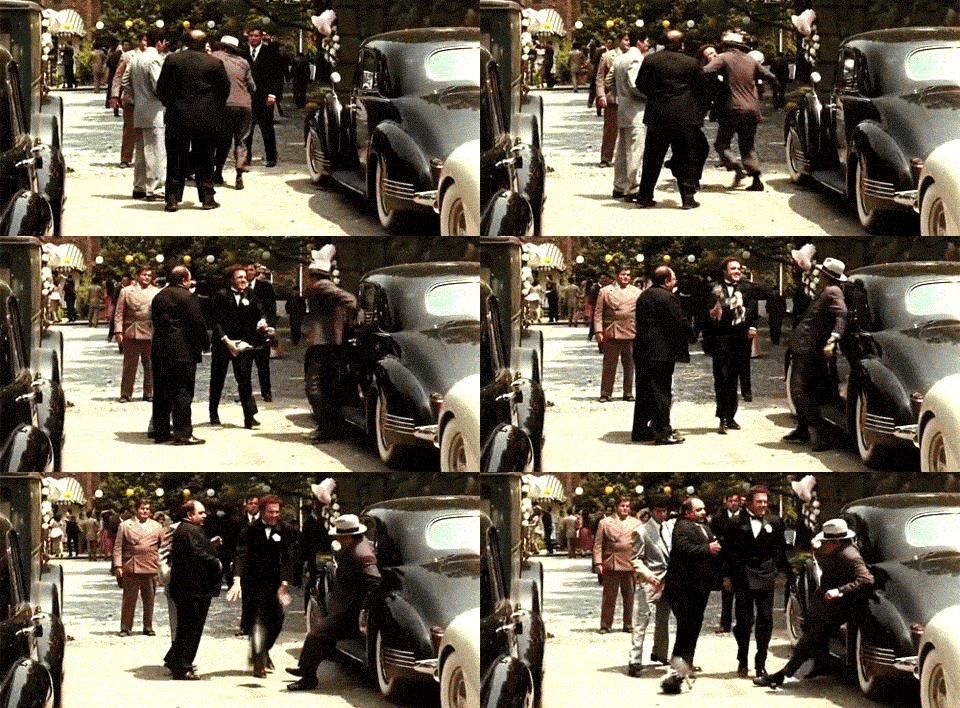
The oldest son of the Corleone family. Sonny, was known to be a hothead. He could fly off of the handle at a moment's notice, like when he broke the reporter's camera at his sister's wedding...


Or when he beat up his sister's abusive husband, Carlo.


... OK, that one was understandable. But Sonny's uncontrolled rage would inevitably be his downfall, why? Because it made him predictable. As fate would have it, Sonny was killed in an ambush by henchmen of a rival mafia family as he angrily left his family compound without bodyguards to get retaliation on Carlo for beating his sister again.

Lesson 3- You could act like a man!

...Or you could act like a woman (for the ladies).

One of the more humorous scenes of the Godfather is the one in which the Corleone family protege, Sinatra-esque singer, Johnny Fontane comes to Vito Corleone talking about his problems in the entertainment business. Fontane tells the Don that his career is in a slump and he needs a role in an upcoming film to get back on track, but a movie producer named Jack Woltz won't hire him. Fontane, then starts to sulk and practically cries to the Don about the situation. Don Corleone furiously gets up, slaps him and demands that he "Act like a man!" 


The lesson in this is that anyone can complain and whine about their problems, but it takes guts to just and handle it like an adult. Johnny Fontane learned the hard way, with a good ol' slap from the Don.

Lesson 4- Don't take sides against the family

Family loyalty is one of the recurring themes of The Godfather. Yet one of the most iconic and ominous scenes of the film occurs when new Corleone family head, Michael speaks sternly with Vegas head honcho Moe Greene about buying his casino. Greene basically is against selling the casino and mocks the power of not only Michael, but of the Corleone family as a whole.

This prompts Michael to put Moe Greene in his place with a calm, yet threatening, chilling comment: 
"I leave for New York tomorrow, think about a price."

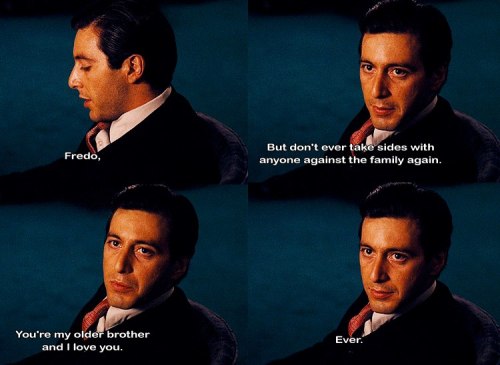
After Greene leaves angrily, Michael's brother, the weak-minded Fredo Corleone scolds him for the way that he talked to Moe Greene. Michael then warns Fredo about something that would inevitably be his downfall...


This lesson is simple, family comes first.

Lesson 5- "Don't ever let anyone outside the family know what you're thinking..."

In addition to Sonny Corleone's inability to contain his anger, he also was bad at holding his tongue. He often said what he felt without regard for whether or not it was a appropriate time to do so.

A prime example of is when Vito Corleone met with rival mob boss, Sollozzo, who was trying to gain money  and protection from the Corleones for his investment in the heroin business. Yet, seeing how risky the business of narcotics is, Corleone refuses.   

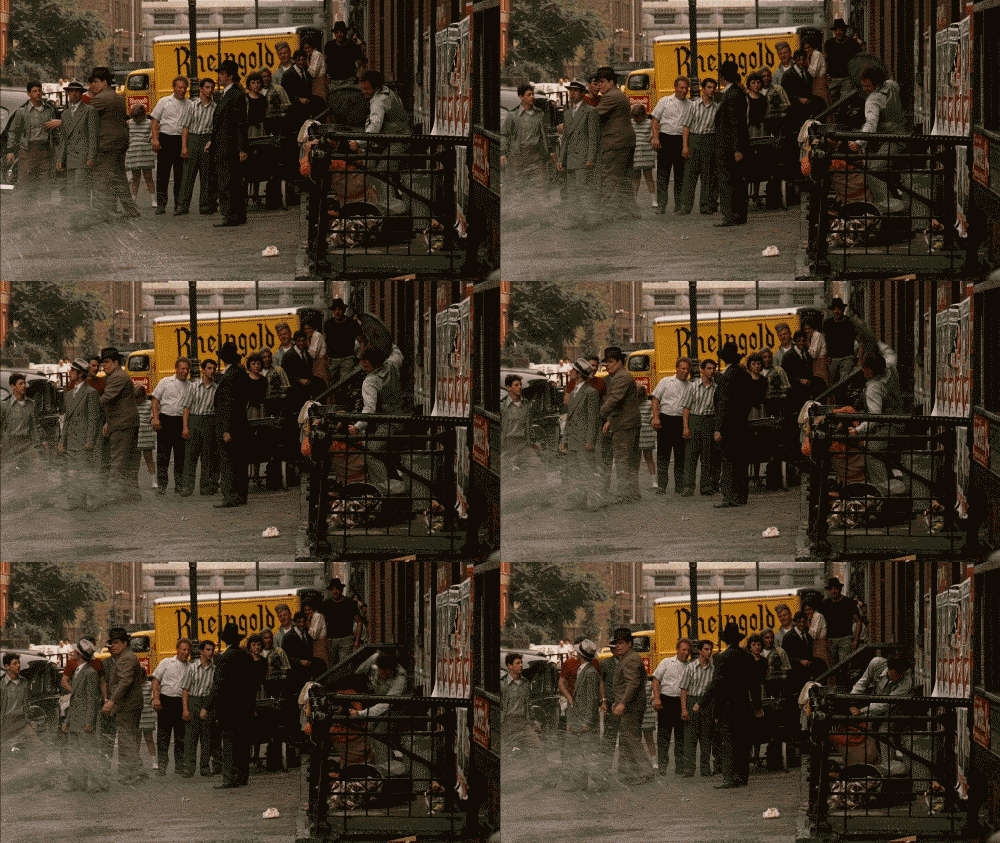
Yet, Sonny, who, unlike his father, was in favor of the Corleones investing in the narcotic business expresses interest in Sollozo's plan. His carelessness angers his father:


 This Sonny's slip of the tongue proves to be a huge mistake. In this small comment, Sollozzo saw a weakness in the Corleone family and saw that Sonny and his father were divided on the issue of narcotics and decided to exploit that weakness.

Since Sonny is the Corleone family underboss, which makes him his father's heir, Sollozzo arranges a hit on Vito.

The lesson in all of this is to be very mindful of what you say to people outside of your inner circle... and when you're in doubt, just shut up

Lesson 6- Be observant

In the world of the Corleone family, families rise to the top of the food chain through power, organization and strategy. But one of the things which kept families like the Corleones at the top is being observant. In some cases, how observant a person is can be a matter of life and death. Like in the meeting after Sonny's death where Vito Corleone declares a truce amongst the five families, and he discovers that Don Barzini, a head of a rival family is one of the main sources of a great deal of the hostility toward the Corleone family.

Just by listening to the way in which people talked, Vito Corleone was able to decipher power relationships amongst the families as well as any hostility toward him. This led him to gain insight on the power dynamics of the families... which inevitably led to his son Michael ordering hits on all of them.

But, murders and violence aside... As The Godfather has showed, it pays off to be observant; keeping your eyes and ears open solves a lot of life's problems.

Lesson 7- Relationships mean a lot

One of the main lessons which I got from The Godfather is that relationships go a long way. Most of the Corleone family's power was built upon their relationships.

Look at Johnny Fontane, he was washed up and wimpy in the beginning of the movie, thanks to his relationship with the Corleones, he was back on top towards the end.


Or you can look at the way in which Carlo exploited his relationship with the Corleones through his marriage to Vito Corleone's daughter Connie.

If the Godfather has showed us anything it's that who let into our inner circle, who we make friends with, who we help and who we make enemies with can play a huge role on our lives.

So in conclusion...

There's nothing quite like a movie that can make you really think, and that's part of the reason why The Godfather is a classic which has stood the test of time. It's not just a gangster flick, it's movie about family, power and change. It offers much more than just good acting and memorable characters, it offers life lessons... and that's an offer you can't refuse.

Wednesday, June 5, 2013

2 Study the Greats, Become Greater

"Study the greats and become greater." -Michael Jackson
Anyone who knows me well knows that I consider myself to be a bit of an impressionist. Since elementary school, I'd perform impressions of my friends, teachers, family members and even celebrities.

Now I'm not saying that I'm the next Robin Williams or anything, but this skill has always fascinated many people.

How I developed this was through years of studying people. I watch what they say, how they say it, their distinctive body language, how they walk, how they laugh, etc.

Yet, as I grew older, I learned to study much more than people's body language and their idiosyncrasies. Whenever I looked up to someone or admire a quality about them, I started to learn about their life, what they went through, how they handled it and what qualities made them so successful at their craft.

Then, I'd emulate the qualities which made those people successful and apply them toward my life. I'd also study their techniques and their style. 

For example, when I decided to try my hand at acting last year in a college play, without even realizing it, I'd sometimes find myself trying to emulate the acting styles of successful actors like Denzel Washington, Robert DeNiro and Marlon Brando.

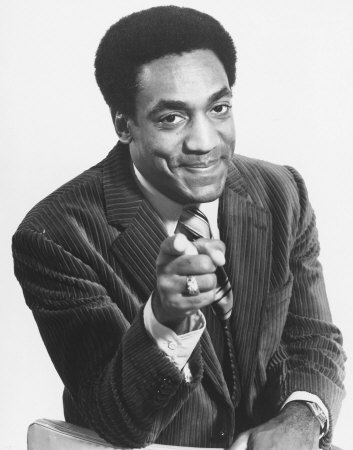
When I performed in a comedic musical the next semester, I realized that a great deal of my comedic style was based off of things which I picked up from comedians Bill Cosby, Eddie Murphy, and George Carlin.


When I hosted talent show on campus, my performace as a host was largely based on the style of late night talk show hosts, Johnny Carson and Conan O'Brien, as well as that of comedian Martin Lawrence when he hosted Def Comedy Jam in the early 90s. 

Even the way that I write is based upon the the works of countless different journalists and authors which I've read throughout my life. 

The point is that in studying great people, there's nothing wrong with emulating certain things which made them great. Of course, you don't want to be an imitation of other people or a plagiarizer, but you can use the styles of other people as a template for developing your own style. 

Look no further than Michael Jackson. We all know he's the "King of Pop" and one of, if not THE greatest musical artist to ever live.


But what few people realize is that Michael was also a student of great entertainers. Everything which made Michael Jackson distinctive was largely influenced by others.

The way that he danced was influenced by entertainers such a Sammy Davis Jr., Cab Calloway and James Brown. Even his signature dance move "The Moonwalk" was a dance that dancers were doing since the days of 1940s vaudeville performances.

Just watch a little bit of this video to see what I mean:  


Even things such as his vocal style and his ad libs were based off of other people. His "vocal hiccup" style of singing was used by artists such as Elvis Presley and Diana Ross.  

His "chamone" (slang for "come on") ad lib, heard in songs like "Bad", was borrowed from Staples Singers vocalist, Mavis Staples.

What we have to realize is that emulating other people a part of life. As babies, we learn to walk and talk largely from watching and listening to the people around us. 

Hell, even the whole basis of this post is based off of things I read in Austin Kleon's book, "Steal Like an Artist"... 


...which I highly recommend, by the way.

So get out and learn from the people you admire, understand their strengths, their weaknesses, and also learn to understand what makes you different from them.

That way, we too can become great.


"I'm all about studying people... And I if find any great man, black or white, I'm gonna study him, learn about him, so he can't be great to me anymore." -Tupac Shakur


Tuesday, June 4, 2013

0 White Kid, Black Culture

Marvin's Note: I met Aaron at Edinboro University, where we were both journalism students. One of the things that struck me about Aaron was his intense love for hip-hop music. I mean, Aaron's the type of guy who could sit and discuss every track of every album of Biggie and 2Pac's career with you for hours. Yet, Aaron's interest in cultures which many people believe to be foreign to him has had its pros and cons throughout the years, here's his story...
By: Aaron McKrell
I consider myself a pretty cultured person, especially for a white kid who grew up in an affluent suburb of Erie, Pa. Particularly, I am familiar with black culture. Growing up, my father took my brother and I with him to high school football games which he would cover as a sports medicine physician.

It was during these cold Friday nights that I became acclimated with black culture, from the dress to the style to the poor living conditions of many residents of Erie's East side.

Those experiences, as well as the fact that I have several adopted black cousins, many black friends, and an obsession with hip hop music and culture, have made me very familiar with black culture. In truth, I feel just as comfortable around my black friends as I do lounging in my house in the suburbs, if not more. However, when I stepped into a gym at a local YMCA last week, I felt strangely uncomfortable.

Walking into the gym, I quickly noticed I was the only white guy in the place. That wasn't an issue; when I'm with my friends I am often the only white guy in the room. Besides, I believe that people are people, so I thought nothing of it and started shooting around. Eventually, I recognized one of the kids shooting on the opposite end of the court as a member of the Strong Vincent basketball team, one that I had interviewed when covering a high school playoff game for the local newspaper. I walked toward him and asked if he remembered me.

"I think I would remember a 6'2, 200-something white dude," he said. I reminded him who I was and he greeted me enthusiastically, bouncing over to me and dapping me up. I caught up with him for a moment and then went back to shooting.

After warming up for a bit, I asked the guys if they wanted to get a game going. Unfortunately, other than the kid I had interviewed, no one seemed interested in talking to me and I was met with a few shrugs of indifference.

I shot around a little longer and then asked again. I was met with pretty much the same response. The guys had apparently been at the gym all day and were resting against the wall, chatting about school and basketball. I tried to join in, purely out of interest in the hoops they were talking.

My interest was met with more indifference.

I tried to carry the conversation, but the warmest response I got was a half-smile. Soon after, when I realized there was going to be no pickup game, I went downstairs to use the elliptical.

I knew what had happened. The guys thought I was some white dude trying to impress them by talking hoops. I've seen it before. As a matter of fact, it's something some of my black friends laugh about; white people trying to impress them in an awkward manner. Here's the problem: I wasn't trying to impress anybody. In reality, all I wanted to do was chat about hoops and play a few pickup games. But the guys
saw me as an outsider. 

This has happened to me before; a few months back I was filling up my tank at a gas station and heard the beat to Kendrick Lamar's "Bitch, Don't Kill My Vibe" coming from a neighboring car, except it wasn't Kendrick rapping, it was some pop singer crooning.

 I asked the lady in the car who it was on the song, and she just responded by simply saying "okay", which basically meant "whatever", as she most likely assumed i was trying to impress her or force a
connection.

I can't be mad at that lady, or the guys in the gym. White people trying to impress black people is something that I've seen happen many times, and I'm sure that would make anyone jaded. For me though, I felt a little hurt, because my interest was genuine and I was viewed as just another white dude trying to impress the black guys.

The old saying goes, don't complain unless you can offer a solution, so here it is: keep an open mind and be yourself.
As difficult as it is for people to fight their preconceived notions of other cultures, it can be done. If you're the only white guy in a room full of black guys, don't try to impress them based on a movie you saw or song you heard.

Likewise, If you see a guy walking into the gym, don't assume he acts a certain way because of the color of his skin. And it's not just a white-black thing; it applies to all ethnicities and cultures.

Be yourself, and give people a chance to be who they are. If that happens, maybe I'll be able to walk into the gym and talk with some kids from Strong Vincent without any preconceived notions tensing the air.


And in turn, if that conversation can happen, we can open up the floor to a whole lot more.

Pages - Menu

The Mind of Marvin Copyright © 2011 - |- Template created by O Pregador - |- Powered by Blogger Templates